
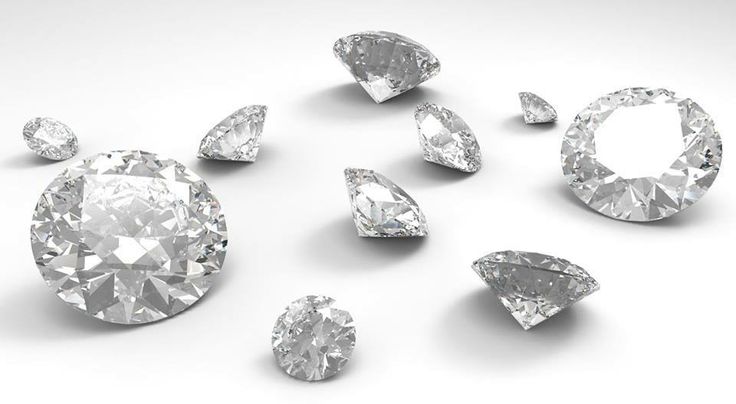
Lab-grown diamonds, D2C startups, and a generation that buys differently
why the world’s second-largest jewellery market is finally attracting serious capital.
For most of its history, India’s jewellery market ran on one simple logic: buy gold, store wealth.
It was less a consumer category and more a savings instrument dressed in a necklace. That logic is
breaking down, and for the first time, investors are paying close attention.
What’s happening in India’s gems and jewellery industry right now is less of a slow evolution and
more of a collision, between traditional buying habits and a digitally native generation that has
learned to treat jewellery the way the West treats fashion: Aspirational, Personal and Frequent.
The shift isn’t just cultural. It’s structural. Organised players are gaining ground on the
unorganised bazaar sector. Digital-first brands are challenging legacy retailers. And an entirely
new product category, lab-grown diamonds, is quietly rewriting the economics of fine jewellery in
India. The market is at an inflection point, and the smart money is starting to notice.
Mandate
Let’s start with the most interesting development in the sector: lab-grown diamonds. A few years
ago, they were an asterisk in the conversation. Today, they’re the conversation itself.
The only difference is where it comes from, and that difference is now a feature, not a flaw.
Lab-grown diamonds are rapidly emerging as one of the most scalable segments within India’s gems
and jewellery industry. In FY2025–26, India’s polished lab-grown diamond exports reached $1.13
billion, while jewellery studded with lab-grown diamonds grew 31% YoY to $1.43 billion, according
to Gem & Jewellery Export Promotion Council data. The segment now contributes nearly 45% of
India’s total diamond export volume, highlighting strong market acceptance.
Government backing has further accelerated growth. Finance Minister Nirmala Sitharaman recognised
lab-grown diamonds as a “sunrise industry” in Union Budget 2023–24, reinforcing India’s ambition
to become a global manufacturing hub for the category.
Consumer demand is also shifting rapidly, particularly among Gen Z and millennial buyers seeking
affordability and sustainability. Brands such as Aukera and Limelight Diamonds are capitalising on
this trend through digital-first, accessible luxury positioning. With the Indian lab-grown diamond
jewellery market projected to reach $1.8 billion by 2036, the segment presents a compelling
long-term growth opportunity.
Lab-Grown
■ Natural: 55%
cuts in Surat, and sells on Instagram.
Parallel to the diamond disruption is a quieter, arguably more durable revolution: direct-to-consumer
jewellery brands rewriting how Indians discover, try, and buy fine and fashion jewellery.
India’s online jewellery market is projected to reach $3.7 billion by 2025, yet 85% of the overall
market still happens offline, which means the organised, digital players are competing for a rapidly
expanding slice of a category that is only beginning to migrate online. That gap between current
penetration and long-run potential is precisely what investors find attractive.
GIVA is perhaps the most visible proof point of what this can look like at scale.
Founded in 2019, the Bengaluru-based brand started with 925 silver jewellery and has since expanded
into 14K/18K gold and lab-grown diamond collections, today operating 200+ physical stores across
Tier I and II cities while running a high-velocity digital commerce engine.
In June 2025, it closed a ₹530 crore (~$62 million) Series C led by Creaegis, valuing the company
at $374 million, a 47% jump from its $254 million valuation just eight months prior. By early 2026,
GIVA’s valuation had climbed further to approximately $545 million. It didn’t compete with
traditional jewellers on their terms. It created a new occasion: the everyday, gifted, lifestyle purchase.
Palmonas has taken a sharper, more differentiated approach, positioning itself around
demi-fine jewellery that is anti-tarnish, contemporary, and made for how people actually live.
In August 2025, it raised $6.2 million in a Series A to scale its product line and distribution.
Their hero product isn’t a wedding set. It’s the piece you wear on a Tuesday.
The brand understood something that legacy jewellers missed: younger consumers don’t buy jewellery
for milestones alone. They buy it for identity.
For context, BlueStone, which went public in 2025 after a 40% revenue rise to ₹1,770 crore in FY25
across 200+ stores, and CaratLane (Tata-backed, ₹3,583 crore revenue, 350+ stores) demonstrate just
how large the omnichannel prize gets for brands that execute well.
The engine powering all of this is social commerce. Influencer-led discovery on Instagram and Pinterest
has compressed the consideration cycle for jewellery purchases. What used to take weeks of visits to
a physical store now happens in minutes.
What makes this cycle particularly interesting for investors is the role of technology in lowering
the barriers that have historically made jewellery a high-friction, high-trust purchase. Virtual
try-on tools, powered by augmented reality, are being deployed by brands and marketplaces alike,
reducing the “I need to see it in person” hesitation that caused endless drop-offs in online jewellery funnels.
AI-driven personalisation is another lever. When a platform knows you recently bought a delicate gold
chain and browsed emerald earrings, the recommendation engine doesn’t just suggest a similar chain,
it curates a collection around your aesthetic. Social commerce on platforms like Meesho and Shopify-native
storefronts is enabling smaller jewellery brands to reach Tier 2 and Tier 3 cities without the overhead
of physical expansion. Geography is no longer a moat. Branding is.
Venture capital doesn’t typically associate itself with jewellery. But the narrative is changing fast.
The combination of a large and underpenetrated addressable market, digitally native consumer behaviour,
and the defensibility of brand-led D2C models is a compelling investment thesis, and capital is arriving to prove it.
The organised sector, which held just 5–10% of the total jewellery market in 2000, now commands around
30–35% of the market and is forecast to reach 40–50% by 2026, per World Gold Council and industry research.
Every percentage point of that shift represents billions of dollars moving toward brands, certification,
and digital experience, and away from the unorganised, unbranded, cash-heavy legacy trade.
Gross margins in branded silver and lab-grown diamond categories run substantially higher than in traditional
gold-heavy formats. Repeat purchase frequency for lifestyle jewellery is meaningfully better. And the cost
of building a brand, while significant, has become far more efficient with social media as the primary acquisition
channel. The most successful D2C jewellery brands have shown that digital-first doesn’t mean digital-only:
a physical store, opened at the right location and moment, supercharges brand credibility and drives cross-channel conversions.
Gold Volatility
Gold price swings compress margins and complicate inventory planning. The Union Budget 2024 cut
basic customs duty on gold from 15% to 6%, which helped demand but adds pricing sensitivity to global commodity cycles.
CAC Pressure
D2C brands face rising customer acquisition costs as digital ad platforms saturate. GIVA’s net loss
widened to ₹58.7 Cr in FY24 even as revenue grew 66%, a reminder that growth at this stage is rarely free.
LGD Price Erosion
Polished lab-grown diamond export values declined 10.55% year-on-year in FY26 even as volumes grew,
per GJEPC. Brands must navigate a commoditising stone market by moving up the value chain into jewellery.
Trust also remains a significant friction point. India’s jewellery purchase is often an emotional and
high-stakes decision, the kind where provenance, purity, and a familiar face across a counter have historically
mattered enormously. Digital brands will need to invest patiently in the credibility that generational jewellers
have accumulated over decades. Mandatory BIS hallmarking, enforced since 2021, helps level that playing field,
but it doesn’t replace relationship.
India’s jewellery industry is entering a phase it has never experienced before: one where the consumer is younger,
more digital, more brand-conscious, and more willing to spend on jewellery as expression rather than just accumulation.
The Department of Commerce has set an export target of $75 billion by 2030, and $100 billion by 2047, ambitions
that require not just manufacturing scale but brand equity, technology adoption, and a new generation of founders
who understand both gemology and growth funnels. Lab-grown diamonds are making fine jewellery accessible.
D2C brands are making it desirable. Technology is making it frictionless. And capital, slowly, then suddenly,
is making it investable.
The question for investors is no longer whether this market will transform. It’s already transforming. The question
is which brands will have the brand equity, operational discipline, and consumer insight to own the next decade of
how India adorns itself.
for generations. It might come from a founder who understood Instagram before they understood karats.
That’s not disruption for disruption’s sake. That’s a market finally meeting the consumers it was always meant to serve.
Department of Commerce (Government of India), World Gold Council, Bureau of Indian Standards (BIS), Inc42,
Future Market Insights, Reserve Bank of India. All figures in USD. FY refers to Indian financial year
(April–March). Market size figures represent the domestic jewellery consumption market unless otherwise noted;
export figures sourced directly from GJEPC monthly/annual reports.